With thanks to Erik G, I was supplied with a PDF of the PL Henry analysis and translation of The Cauldron of Poesy, which you can find at this link in PDF form. It's well worth reading, so please have a look!
This article includes a version of the original Irish as well as Henry's translation. It's from Studia Celtica 14/15, (1979/1980), pp 114-128.
Searching for Imbas
A Professional Madwoman's Search for Poetic Inspiration
Sunday, May 5, 2013
Saturday, February 2, 2013
Nora Chadwick's Geilt article
I've had more than a few requests for this over the years so, while I had some time today, I scanned Nora Chadwick's Geilt article and have posted it as a PDF that you can download at this link.
While the article was originally published in 1942, it covers a lot of ground regarding these figures in Gaelic mythology. It's an important work for anyone interested in the mad poet figure in Gaelic texts and has been very helpful in my research and work over the years. If you're interested in reading Buile Suibhne, this will help with understanding the background and context in which this and other geilt tales were written.
Since I posted her Imbas Forosnai article here some months ago, it seemed fitting to post this companion piece. I hope you'll find them useful!
Oh, and blessed Imbolc!
While the article was originally published in 1942, it covers a lot of ground regarding these figures in Gaelic mythology. It's an important work for anyone interested in the mad poet figure in Gaelic texts and has been very helpful in my research and work over the years. If you're interested in reading Buile Suibhne, this will help with understanding the background and context in which this and other geilt tales were written.
Since I posted her Imbas Forosnai article here some months ago, it seemed fitting to post this companion piece. I hope you'll find them useful!
Oh, and blessed Imbolc!
Friday, December 7, 2012
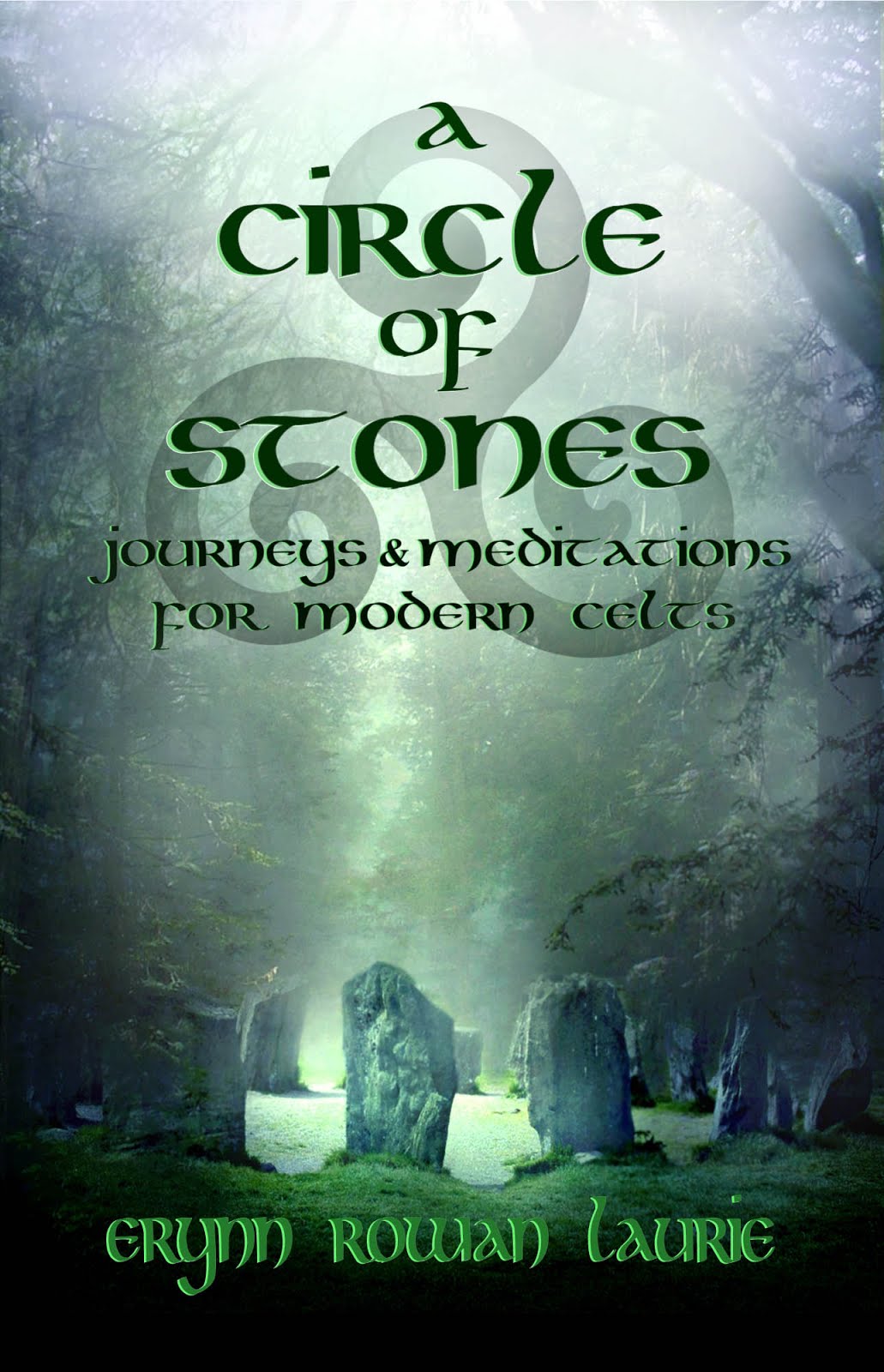
Audio files for A Circle of Stones
Over the years, one of the things I've had the most requests for has been a series of audio files for the prayers in A Circle of Stones: Journeys & Meditations for Modern Celts. It's never been anything I would be that good at. My pronunciation sucks and I wouldn't want to inflict it on anyone.
Last year, I was able to talk Caera into doing the files. She's been through a lot of stress this year and has had to move several times, but she's finally had the time to put together audio files for the book. She speaks fluent Irish, and enough Gaelic to be able to do some justice to the prayers. She's produced an album of audio files to go with the second edition of CoS, which is now available on BandCamp.
Click here for your copy of the audio files for Circle of Stones - only $5 US!
All the money for these audio files goes to Caera, in thanks for her work on the project and for her editing of the second edition of the book. I'm very grateful to her for making this available to you. Please pass the word far and wide. And while you're at her BandCamp store, please check out her music, as well! Caera is an accomplished harper who plays a medieval wire-strung Celtic harp, and she has a really lovely soprano voice. On her various CDs, she sings in Irish, Scots Gaelic, Manx, and Welsh, as well as a little English.
You know you want to.
Last year, I was able to talk Caera into doing the files. She's been through a lot of stress this year and has had to move several times, but she's finally had the time to put together audio files for the book. She speaks fluent Irish, and enough Gaelic to be able to do some justice to the prayers. She's produced an album of audio files to go with the second edition of CoS, which is now available on BandCamp.
Click here for your copy of the audio files for Circle of Stones - only $5 US!
All the money for these audio files goes to Caera, in thanks for her work on the project and for her editing of the second edition of the book. I'm very grateful to her for making this available to you. Please pass the word far and wide. And while you're at her BandCamp store, please check out her music, as well! Caera is an accomplished harper who plays a medieval wire-strung Celtic harp, and she has a really lovely soprano voice. On her various CDs, she sings in Irish, Scots Gaelic, Manx, and Welsh, as well as a little English.
You know you want to.
Labels:
audio files,
circle of stones,
file download,
language,
links,
music,
practice
Tuesday, October 30, 2012
A Samhain ritual text
I was blessed to have my girlfriend and some of our mutual friends over for my Samhain ritual on Sunday. A lot of people talk about the dearth of ritual material in the CR community, or they worry about "doing it wrong," or they're just not sure what it might look like to do a ritual that derives from the various Celtic traditions.
For these reasons, and others, I'm posting the text of the ritual we did this weekend in the hope that, if you're feeling uninspired, it might give you a few ideas to work with. There's a lot more out there now than there used to be, but it can still be hard to find things that resonate, or that seem appropriate.
This ritual derives from Irish and Scottish materials. I'll add some notes at the end of the text. Setting an ancestor altar is the central aspect of this ritual, as is the making of offerings to them as our guests at the feast.
***
Samhain ritual, October 28, 2012
Scél lem dúib
Dordaid dam
Snigid gaim
Ro faith sam
I have tidings for you
The stag bells
Winter pours
Summer has gone
Gáeth ard úar
Ísel grían
Gair a rrith
Ruirthech rían
Wind is high and cold
The sun is low
Its course is short
The sea runs strongly
Rorúad rath
Ro cleth cruth
Ro gab gnáth
Guigrann guth
Bracken is very red
Its shape has been hidden
The call of the barnacle-goose
Has become unusual
Ro gab úacht
Etti én
Aigre ré
É mo scél
Cold has seized
The wings of birds
Season of ice
These are my tidings
[Juniper purification]
Peace up to heaven
Heaven down to earth
Earth beneath heaven
Strength in each
A cup very full
Full of honey
Mead in abundance
Peace up to heaven
Power of raven be thine
Power of eagle be thine
Power of the fian
Power of storm be thine
Power of moon be thine
Power of sun
Power of sea be thine
Power of land be thine
Power of heaven.
[Three Realms acknowledgement]
We stand within the embrace of muir mas, nem nglas, talam cé – the beautiful sea, the blue sky, the ever-present earth. We stand here now, beneath the nine hazels at the center of the world, at the lip of the well of wisdom.
I call upon all the powers that exist in land, sea, and sky
I call upon you at the edge of the year
I call upon every creature to be at peace with us
Let our beloved dead be remembered
Let them find a place at our table
Let them find joy in our remembering
May we speak of them with love
May we remember them with kindness
May we be blessed by their presence
[Lighting the fire]
I light the fire as Brigid lit
With the spark from her forge
With light from her well
With the fire from her soul
[Set the altar with photos, candles, and mementos]
[Place the group offering of food on the altar before the ancestors]
We give whisky to you for your welcome
For your thirst we give you milk
Food of the feast for you, first of all shares
Be welcome among us
[feasting]
[Personal offerings and prayers to the ancestors (music/poetry/etc)]
[Neep carving]
[Ancestor meditation]
[Divination]
[Closing and Departure]
We are always within the embrace of muir mas, nem nglas, talam cé – the beautiful sea, the blue sky, the ever-present earth. Wherever we walk, we stand upon the land. Wherever we are, the sea surrounds us. Wherever we breathe, we are beneath the sky.
Hear us, ancestors and beloved dead
You who have shared our feast
We have made our offerings
We have offered our prayers
We have remembered you
Remember us kindly
Watch over us through the darkness of the year
Hold us in your hearts with love
[Offerings into the fire]
Take the substance of the feast with you
Take food and drink for your health
Take with you our thoughts and the warmth of our memories
Our blessings go with you as you walk
***
The opening poem is from the early Irish tradition and can be found in Gerard Murphy's Early Irish Lyrics. It is dated to the 9th or 10th century CE and is attributed to Fionn mac Baiscne.
Purification with juniper has been discussed here before, and the practice originates in Scotland. The stanza of "peace up to heaven" is from the response of the Morrígan to Badb after the Second Battle of Mag Tuired. The remainder of this purification and blessing is from the Carmina Gadelica, a collection of Scottish Gaelic prayers, songs, and charms.
The concept of the three realms of land, sea, and sky is found in a great number of early Irish sources, and similar cosmological patterns can be found in other Celtic cultures. The phrase muir mas, nem nglas, talam cé is found in the 8th century poems of Blathmac. This cosmological triad is discussed in some depth in Liam MacMathúna's article Irish Perceptions of the Cosmos, published in Celtica 23, 1999.
Turnip lanterns are the origin of the American custom of carving pumpkin lanterns at Halloween.
The line "I light the fire as Brigid lit" is from fire kindling prayers in the Carmina Gadelica.
The rest of the text is original, but inspired by the patterns and poetry of the Gaelic traditions. This weaving together of traditional sources and modern inspiration is at the heart of how I do Celtic Reconstructionist polytheist rituals. Knowing that there aren't any complete and intact pre-Christian Gaelic ritual texts, we need to make do with what's available, and to trust ourselves to gain enough understanding to work with what does exist and expand upon it.
I wish you all a blessed Samhain.
For these reasons, and others, I'm posting the text of the ritual we did this weekend in the hope that, if you're feeling uninspired, it might give you a few ideas to work with. There's a lot more out there now than there used to be, but it can still be hard to find things that resonate, or that seem appropriate.
This ritual derives from Irish and Scottish materials. I'll add some notes at the end of the text. Setting an ancestor altar is the central aspect of this ritual, as is the making of offerings to them as our guests at the feast.
***
Samhain ritual, October 28, 2012
Scél lem dúib
Dordaid dam
Snigid gaim
Ro faith sam
I have tidings for you
The stag bells
Winter pours
Summer has gone
Gáeth ard úar
Ísel grían
Gair a rrith
Ruirthech rían
Wind is high and cold
The sun is low
Its course is short
The sea runs strongly
Rorúad rath
Ro cleth cruth
Ro gab gnáth
Guigrann guth
Bracken is very red
Its shape has been hidden
The call of the barnacle-goose
Has become unusual
Ro gab úacht
Etti én
Aigre ré
É mo scél
Cold has seized
The wings of birds
Season of ice
These are my tidings
[Juniper purification]
Peace up to heaven
Heaven down to earth
Earth beneath heaven
Strength in each
A cup very full
Full of honey
Mead in abundance
Peace up to heaven
Power of raven be thine
Power of eagle be thine
Power of the fian
Power of storm be thine
Power of moon be thine
Power of sun
Power of sea be thine
Power of land be thine
Power of heaven.
[Three Realms acknowledgement]
We stand within the embrace of muir mas, nem nglas, talam cé – the beautiful sea, the blue sky, the ever-present earth. We stand here now, beneath the nine hazels at the center of the world, at the lip of the well of wisdom.
I call upon all the powers that exist in land, sea, and sky
I call upon you at the edge of the year
I call upon every creature to be at peace with us
Let our beloved dead be remembered
Let them find a place at our table
Let them find joy in our remembering
May we speak of them with love
May we remember them with kindness
May we be blessed by their presence
[Lighting the fire]
I light the fire as Brigid lit
With the spark from her forge
With light from her well
With the fire from her soul
[Set the altar with photos, candles, and mementos]
[Place the group offering of food on the altar before the ancestors]
We give whisky to you for your welcome
For your thirst we give you milk
Food of the feast for you, first of all shares
Be welcome among us
[feasting]
[Personal offerings and prayers to the ancestors (music/poetry/etc)]
[Neep carving]
[Ancestor meditation]
[Divination]
[Closing and Departure]
We are always within the embrace of muir mas, nem nglas, talam cé – the beautiful sea, the blue sky, the ever-present earth. Wherever we walk, we stand upon the land. Wherever we are, the sea surrounds us. Wherever we breathe, we are beneath the sky.
Hear us, ancestors and beloved dead
You who have shared our feast
We have made our offerings
We have offered our prayers
We have remembered you
Remember us kindly
Watch over us through the darkness of the year
Hold us in your hearts with love
[Offerings into the fire]
Take the substance of the feast with you
Take food and drink for your health
Take with you our thoughts and the warmth of our memories
Our blessings go with you as you walk
***
The opening poem is from the early Irish tradition and can be found in Gerard Murphy's Early Irish Lyrics. It is dated to the 9th or 10th century CE and is attributed to Fionn mac Baiscne.
Purification with juniper has been discussed here before, and the practice originates in Scotland. The stanza of "peace up to heaven" is from the response of the Morrígan to Badb after the Second Battle of Mag Tuired. The remainder of this purification and blessing is from the Carmina Gadelica, a collection of Scottish Gaelic prayers, songs, and charms.
The concept of the three realms of land, sea, and sky is found in a great number of early Irish sources, and similar cosmological patterns can be found in other Celtic cultures. The phrase muir mas, nem nglas, talam cé is found in the 8th century poems of Blathmac. This cosmological triad is discussed in some depth in Liam MacMathúna's article Irish Perceptions of the Cosmos, published in Celtica 23, 1999.
Turnip lanterns are the origin of the American custom of carving pumpkin lanterns at Halloween.
The line "I light the fire as Brigid lit" is from fire kindling prayers in the Carmina Gadelica.
The rest of the text is original, but inspired by the patterns and poetry of the Gaelic traditions. This weaving together of traditional sources and modern inspiration is at the heart of how I do Celtic Reconstructionist polytheist rituals. Knowing that there aren't any complete and intact pre-Christian Gaelic ritual texts, we need to make do with what's available, and to trust ourselves to gain enough understanding to work with what does exist and expand upon it.
I wish you all a blessed Samhain.
Labels:
festivals,
Ireland,
polytheism,
practice,
ritual,
Samhain ritual text,
Scotland
Monday, October 15, 2012
Pre-order link for Fireflies at Absolute Zero
My publisher has just released the link to the pre-order page for my poetry collection, Fireflies at Absolute Zero from Hiraeth Press. The book is $15.95 plus postage and is due to ship on October 31st, 2012.
I got some lovely cover text from several writers, including Ruby Sara, editor of the Datura and Mandragora esoteric poesis anthologies. From the Hiraeth page:
“Erynn Rowan Laurie’s Fireflies at Absolute Zero is a call to poetic arms, written with the ferocity and passion of the Earth warrior — “my poems burn like stars/ they fall like spears from the oil-black sky.” It is a hymn of praise to the old gods, written in the long tradition of poets as dreamers of new worlds, and re-memberers of old ones. Indeed, Laurie’s poetry reminds us all that humanity cannot face its struggles with either mushy platitudes or militarist cliché; we require the nuance of the poet who dances courageously on the edges, between the struggle and the embrace.” –Theodore Richards, author of Cosmosophia and The Crucifixion
“Following an ancient tradition of craft and inspiration, Erynn Rowan Laurie’s work breathes in wonder, transmutes it into a crisp lyricism, and offers it, sharp and focused, back to the waking world. Grounded in experience, dream, and story, these poems declare with rich attention the wild voice of the divine, the warp and weft of myth, the complexity of being human, and the great beauty of the earth, rough and sweet. Fireflies at Absolute Zero is a collection for all who seek to invite in the raw, poetic nature of being and witness to the singing of spirits and powers; bluejay, human struggle, mandrake, divine story, seashore...all brought into focus by the magic of the sacred word.” –Ruby Sara, editor of Datura and Mandragora
“Yes, this book of poems sings with lyrics, dances with visions, flies into spaces not yet filled with song, and lights dark places. But is it a book about writing poetry or about being a poet or being at-one with the natural world, literary world, and mythological world? Or it is about spiritual journeys or about embracing more fully the unknown? Yes!” –Mary Harwell Sayler, author of Living in the Nature Poem
“At the sharp edges of Dreams and Desires I have found a kindred spirit of the shining endarkenment.” –James McDowell, author of Night, Mystery & Light
Many thanks to Jason Kirkey and Leslie Browning of Hiraeth for their support and encouragement. It has been a delight to work with them on this project!
I got some lovely cover text from several writers, including Ruby Sara, editor of the Datura and Mandragora esoteric poesis anthologies. From the Hiraeth page:
“Erynn Rowan Laurie’s Fireflies at Absolute Zero is a call to poetic arms, written with the ferocity and passion of the Earth warrior — “my poems burn like stars/ they fall like spears from the oil-black sky.” It is a hymn of praise to the old gods, written in the long tradition of poets as dreamers of new worlds, and re-memberers of old ones. Indeed, Laurie’s poetry reminds us all that humanity cannot face its struggles with either mushy platitudes or militarist cliché; we require the nuance of the poet who dances courageously on the edges, between the struggle and the embrace.” –Theodore Richards, author of Cosmosophia and The Crucifixion
“Following an ancient tradition of craft and inspiration, Erynn Rowan Laurie’s work breathes in wonder, transmutes it into a crisp lyricism, and offers it, sharp and focused, back to the waking world. Grounded in experience, dream, and story, these poems declare with rich attention the wild voice of the divine, the warp and weft of myth, the complexity of being human, and the great beauty of the earth, rough and sweet. Fireflies at Absolute Zero is a collection for all who seek to invite in the raw, poetic nature of being and witness to the singing of spirits and powers; bluejay, human struggle, mandrake, divine story, seashore...all brought into focus by the magic of the sacred word.” –Ruby Sara, editor of Datura and Mandragora
“Yes, this book of poems sings with lyrics, dances with visions, flies into spaces not yet filled with song, and lights dark places. But is it a book about writing poetry or about being a poet or being at-one with the natural world, literary world, and mythological world? Or it is about spiritual journeys or about embracing more fully the unknown? Yes!” –Mary Harwell Sayler, author of Living in the Nature Poem
“At the sharp edges of Dreams and Desires I have found a kindred spirit of the shining endarkenment.” –James McDowell, author of Night, Mystery & Light
Many thanks to Jason Kirkey and Leslie Browning of Hiraeth for their support and encouragement. It has been a delight to work with them on this project!
Labels:
book,
poetry,
publication,
writing
Wednesday, September 26, 2012
Airmed and Heapstown Cairn
Airmed was the first Celtic deity I ever had an experience with. She's been with me for pretty much the entire time I've been Pagan, though it took a couple of years to find out who she was and then figure out why she was with me and what she was about. Even back when I was practicing a pretty generic Paganism based on eclectic Wicca, she was there. Her presence was earthy and expansive, but there was also something cosmic and overwhelming about her in some of my experiences.
Airmed was the one who told me she wanted to hear Gaelic spoken to her; I'm not very good at it, but I can manage a few phrases in prayers. I'm still working on it, but my foreign language skills aren't that great, so it takes time. She fostered my interest in healing work and herbs over the years, and I keep an altar dedicated to her in my home. The first piece of paid writing I ever did was an article on her for SageWoman magazine, in the Spring 1994 issue, called Goddess of the Growing Green.
This drawing by Joanna Powell Colbert, in black and white, accompanied the article in the magazine.
The image here is by the Irish artist Jim Fitzpatrick. It is a concept drawing for a sculpture that, as far as I know, was never actually made, intended for a hospital site. This is one of the images I have hanging over my altar for her.
As a part of this summer's pilgrimage to Ireland, our group visited Heapstown Cairn, a site associated with Airmed, Dian Cécht, Miach, and Octriuil and said to be the site of the healing well of Sláine that features in the Second Battle of Mag Tuired. The cairn is just at the northeast tip of Lough Arrow, in County Sligo and can be seen from the road, inside a large ring of trees.
This is a place I'd wanted to visit ever since I found out about it last year while researching sites for the pilgrimage. I'd been asked by Vyviane if there were any Airmed sites in Ireland on behalf of a friend of hers and set out to see if there were. I hadn't been certain we'd be able to visit the place, given our schedule, but it turned out we were staying not far from there, just on the other side of the lake. I was determined at that point that we'd do an Airmed ritual there, and this was the place I wanted to dedicate the moss agate ogam feda that I'd made for her at the end of March this year.
Heapstown Cairn was our first stop of the day - later we would go to Knocknarea, to climb to Maeve's Cairn at the top of the hill. It was a grey day but not raining at that point. We crossed a verdant field to reach the cairn.
As one does in Ireland, we had to watch where we walked to avoid stepping into the leavings of cattle. Some of the ground was quite boggy, as you might expect near a lake when it's been raining a lot. Walking through the pastureland reminded me a lot of the fields I used to cross when I was growing up in New England, where my nearest neighbors were dairy farmers and most of the places I wanted to play were in or across a pasture.
During our initial approach to the cairn, the group split and wandered, looking for a suitable place to hold our ritual. There were a couple of promising spots, but they weren't quite large enough for everyone. Eventually we settled on a little semicircular clearing on the southeast side of the cairn. As I walked, seeking the proper place, I was quietly singing a chant we'd written that morning as a part of our preparation for the ritual, based on traditional Gaelic healing lore, intertwined with singing Airmed's name.
Bone to bone
Flesh to flesh
Blood to Blood
Heal us now
Teach the herbs to us
The cairn itself has not, like Newgrange or Knowth, been excavated. There are kerbstones, but they are much overgrown and not visible, for the most part. No one knows if there are petroglyphs on them. The cairn itself is much reduced over the centuries. Local fences and other stone structures were built with some of the stones, and the pillar that once stood atop the cairn fell and was broken sometime in the last hundred years or so. We were told we shouldn't climb the cairn to avoid destroying anything if stones were dislodged. I think it was also because people wanted to be sure nobody was going to be diminishing the cairn even further by taking stones away.
Most people interested in Irish mythology who know about Airmed will have heard the tale about Airmed and the healing herbs. In the first battle of Mag Tuired, the arm of Nuadha, the king of the Tuatha Dé Danann, was severed, making him ineligible to remain king. It was then replaced by a silver limb created by Dian Cécht. Having decided that this wasn't good enough, his son Miach replaced Nuadha's flesh arm by singing a charm much like the one above, and the use of the ashes of a wisp of burned straw to heal and regenerate the limb.
Dian Cécht, none too pleased by these proceedings, killed Miach and he was buried under a cairn from which the 365 healing herbs grew. Miach's sister Airmed collected these herbs in her cloak, sorted by their properties and the parts of the body that they treated. Dian Cécht, not wanting the knowledge of this powerful healing to be available to everyone, scattered the herbs. Most people think of this as the end of the story.
It isn't.
During the second battle of Mag Tuired, Dian Cécht made a visit to the place called Lusmag, the Plain of Herbs, where he gathered up all the healing herbs in the land, and he brought them to the Well of Sláine, at Heapstown Cairn. The herbs were placed in the water and four healers chanted powerful spells over the well. Those four healers were Dian Cécht, Airmed, Octriuil her brother, and Miach. It makes sense to me that a god whose body became healing herbs would, like a plant, rise again and regenerate himself, reborn for healing work.
The Fomhoire, seeing that the warriors of the Tuatha Dé Danann would be wounded and rise up whole the next morning to battle once again, realized that the healing well was responsible for this. Indech's son, Octriallaig, disguised the warriors of the Fomhoire as the wounded of the Tuatha Dé Danann, and each warrior carried with him a stone, which he dropped into the well. So many were these warriors that a huge cairn rose over the well, sealing it off and making it inaccessible, removing some of the most powerful healing magic available at the battle.
Local lore says that the well is still under there and that it can be seen by crawling into a passage in the cairn. Our driver, Con, spoke to one of the local ladies while we were off doing ritual; she said that when she was young she'd heard about kids who had gone into the cairn and seen the well themselves. The passage was supposedly still accessible somewhere, but no one could find it.
For the ritual itself, I told the story of Airmed and the herbs, and of the well beneath the cairn. A cloth was laid out to represent her cloak, a cauldron for incense, and a bowl filled with water for the well itself, in the center. Each person had been given a little packet containing an herb, and a slip of paper with the name of the herb and its properties listed on it. When we got to the part where Airmed was sorting the herbs from her brother's grave and laying them on the cloak, we each laid out our packet of herbs and described what the herb was and what it did.
When we heard the part of the tale where Dian Cécht brought the herbs from Lusmag and placed them in the well and the four healers stood around it chanting healing charms, we each put a bit of our herbs into the "well" and offered a pinch into the charcoal for an offering. Other offerings were made as well - whiskey was poured out, bits of food were offered, herbs, and other personal things by those who had brought them. After we placed the herbs into the water, we sang the chant we'd created that morning, noted above, and took some time to do any personal workings we wanted to, whether communing with Airmed, meditating with the land, or asking for healing; this is where I did the dedication of my ogam feda.
After our workings, we heard the story of how the cairn itself was formed and the healing well buried. The ritual was closed, the water poured out, and the charcoal doused. The cloth representing the cloak still had bits of herbs clinging to it, and I shook it out into the wind, scattering the herbs as Dian Cécht had once done.
I know I'm not the only person in the group who felt that they had connected with Airmed in that place. I experienced a feeling of being very close to her, and of reaching into some essence of her spirit, her presence all around the edges of my perception. I felt her in the land and in the plants growing on and around the cairn, her blessings in the wind. I'm very thankful to have had the chance to visit this place and forge a deeper connection with my first Irish goddess.
The opportunity to do ritual in the landscape where these tales took place, where local lore has a connection to both history and the spiritual in the land, was profound for me. It cannot happen like that in the place where I live. The core myths of my spirituality take place in another country on the other side of the earth, and I bring what I can of it into my own place, but it feels very different here than it does in Ireland. The connection is easier and deeper but at the same time, I can feel that Ireland isn't my place; mine is on the shores of the Salish Sea here in the Pacific Northwest. Much of the landscape is similar, the weather is very like, and many of the same plants and animals are found here, but their energies manifest differently.
Visiting Ireland, for me, wasn't like coming home. I know folks who have had that homecoming experience in Europe. For me it was like visiting the roots of something deep and significant, but it wasn't a return home. The act of pilgrimage is one of leaving home and familiar environs to make a holy visit to a sacred place -- and then to return home once more, transformed. By its nature, the site visited is something set apart from one's daily life, whether it is visited once in a lifetime, once in a year, or even more often. Pilgrimage offers us a way to approach a place in an altered frame of mind, with a heightened openness to certain types of experience of the numinous and the liminal. The places we visit on pilgrimage are, for us, threshold places where the Otherworlds bleed into our own.
Airmed was the one who told me she wanted to hear Gaelic spoken to her; I'm not very good at it, but I can manage a few phrases in prayers. I'm still working on it, but my foreign language skills aren't that great, so it takes time. She fostered my interest in healing work and herbs over the years, and I keep an altar dedicated to her in my home. The first piece of paid writing I ever did was an article on her for SageWoman magazine, in the Spring 1994 issue, called Goddess of the Growing Green.
This drawing by Joanna Powell Colbert, in black and white, accompanied the article in the magazine.
The image here is by the Irish artist Jim Fitzpatrick. It is a concept drawing for a sculpture that, as far as I know, was never actually made, intended for a hospital site. This is one of the images I have hanging over my altar for her.
As a part of this summer's pilgrimage to Ireland, our group visited Heapstown Cairn, a site associated with Airmed, Dian Cécht, Miach, and Octriuil and said to be the site of the healing well of Sláine that features in the Second Battle of Mag Tuired. The cairn is just at the northeast tip of Lough Arrow, in County Sligo and can be seen from the road, inside a large ring of trees.
This is a place I'd wanted to visit ever since I found out about it last year while researching sites for the pilgrimage. I'd been asked by Vyviane if there were any Airmed sites in Ireland on behalf of a friend of hers and set out to see if there were. I hadn't been certain we'd be able to visit the place, given our schedule, but it turned out we were staying not far from there, just on the other side of the lake. I was determined at that point that we'd do an Airmed ritual there, and this was the place I wanted to dedicate the moss agate ogam feda that I'd made for her at the end of March this year.
Heapstown Cairn was our first stop of the day - later we would go to Knocknarea, to climb to Maeve's Cairn at the top of the hill. It was a grey day but not raining at that point. We crossed a verdant field to reach the cairn.
As one does in Ireland, we had to watch where we walked to avoid stepping into the leavings of cattle. Some of the ground was quite boggy, as you might expect near a lake when it's been raining a lot. Walking through the pastureland reminded me a lot of the fields I used to cross when I was growing up in New England, where my nearest neighbors were dairy farmers and most of the places I wanted to play were in or across a pasture.
During our initial approach to the cairn, the group split and wandered, looking for a suitable place to hold our ritual. There were a couple of promising spots, but they weren't quite large enough for everyone. Eventually we settled on a little semicircular clearing on the southeast side of the cairn. As I walked, seeking the proper place, I was quietly singing a chant we'd written that morning as a part of our preparation for the ritual, based on traditional Gaelic healing lore, intertwined with singing Airmed's name.
Bone to bone
Flesh to flesh
Blood to Blood
Heal us now
Teach the herbs to us
The cairn itself has not, like Newgrange or Knowth, been excavated. There are kerbstones, but they are much overgrown and not visible, for the most part. No one knows if there are petroglyphs on them. The cairn itself is much reduced over the centuries. Local fences and other stone structures were built with some of the stones, and the pillar that once stood atop the cairn fell and was broken sometime in the last hundred years or so. We were told we shouldn't climb the cairn to avoid destroying anything if stones were dislodged. I think it was also because people wanted to be sure nobody was going to be diminishing the cairn even further by taking stones away.
Most people interested in Irish mythology who know about Airmed will have heard the tale about Airmed and the healing herbs. In the first battle of Mag Tuired, the arm of Nuadha, the king of the Tuatha Dé Danann, was severed, making him ineligible to remain king. It was then replaced by a silver limb created by Dian Cécht. Having decided that this wasn't good enough, his son Miach replaced Nuadha's flesh arm by singing a charm much like the one above, and the use of the ashes of a wisp of burned straw to heal and regenerate the limb.
Dian Cécht, none too pleased by these proceedings, killed Miach and he was buried under a cairn from which the 365 healing herbs grew. Miach's sister Airmed collected these herbs in her cloak, sorted by their properties and the parts of the body that they treated. Dian Cécht, not wanting the knowledge of this powerful healing to be available to everyone, scattered the herbs. Most people think of this as the end of the story.
It isn't.
During the second battle of Mag Tuired, Dian Cécht made a visit to the place called Lusmag, the Plain of Herbs, where he gathered up all the healing herbs in the land, and he brought them to the Well of Sláine, at Heapstown Cairn. The herbs were placed in the water and four healers chanted powerful spells over the well. Those four healers were Dian Cécht, Airmed, Octriuil her brother, and Miach. It makes sense to me that a god whose body became healing herbs would, like a plant, rise again and regenerate himself, reborn for healing work.
The Fomhoire, seeing that the warriors of the Tuatha Dé Danann would be wounded and rise up whole the next morning to battle once again, realized that the healing well was responsible for this. Indech's son, Octriallaig, disguised the warriors of the Fomhoire as the wounded of the Tuatha Dé Danann, and each warrior carried with him a stone, which he dropped into the well. So many were these warriors that a huge cairn rose over the well, sealing it off and making it inaccessible, removing some of the most powerful healing magic available at the battle.
Local lore says that the well is still under there and that it can be seen by crawling into a passage in the cairn. Our driver, Con, spoke to one of the local ladies while we were off doing ritual; she said that when she was young she'd heard about kids who had gone into the cairn and seen the well themselves. The passage was supposedly still accessible somewhere, but no one could find it.
For the ritual itself, I told the story of Airmed and the herbs, and of the well beneath the cairn. A cloth was laid out to represent her cloak, a cauldron for incense, and a bowl filled with water for the well itself, in the center. Each person had been given a little packet containing an herb, and a slip of paper with the name of the herb and its properties listed on it. When we got to the part where Airmed was sorting the herbs from her brother's grave and laying them on the cloak, we each laid out our packet of herbs and described what the herb was and what it did.
When we heard the part of the tale where Dian Cécht brought the herbs from Lusmag and placed them in the well and the four healers stood around it chanting healing charms, we each put a bit of our herbs into the "well" and offered a pinch into the charcoal for an offering. Other offerings were made as well - whiskey was poured out, bits of food were offered, herbs, and other personal things by those who had brought them. After we placed the herbs into the water, we sang the chant we'd created that morning, noted above, and took some time to do any personal workings we wanted to, whether communing with Airmed, meditating with the land, or asking for healing; this is where I did the dedication of my ogam feda.
After our workings, we heard the story of how the cairn itself was formed and the healing well buried. The ritual was closed, the water poured out, and the charcoal doused. The cloth representing the cloak still had bits of herbs clinging to it, and I shook it out into the wind, scattering the herbs as Dian Cécht had once done.
I know I'm not the only person in the group who felt that they had connected with Airmed in that place. I experienced a feeling of being very close to her, and of reaching into some essence of her spirit, her presence all around the edges of my perception. I felt her in the land and in the plants growing on and around the cairn, her blessings in the wind. I'm very thankful to have had the chance to visit this place and forge a deeper connection with my first Irish goddess.
The opportunity to do ritual in the landscape where these tales took place, where local lore has a connection to both history and the spiritual in the land, was profound for me. It cannot happen like that in the place where I live. The core myths of my spirituality take place in another country on the other side of the earth, and I bring what I can of it into my own place, but it feels very different here than it does in Ireland. The connection is easier and deeper but at the same time, I can feel that Ireland isn't my place; mine is on the shores of the Salish Sea here in the Pacific Northwest. Much of the landscape is similar, the weather is very like, and many of the same plants and animals are found here, but their energies manifest differently.
Visiting Ireland, for me, wasn't like coming home. I know folks who have had that homecoming experience in Europe. For me it was like visiting the roots of something deep and significant, but it wasn't a return home. The act of pilgrimage is one of leaving home and familiar environs to make a holy visit to a sacred place -- and then to return home once more, transformed. By its nature, the site visited is something set apart from one's daily life, whether it is visited once in a lifetime, once in a year, or even more often. Pilgrimage offers us a way to approach a place in an altered frame of mind, with a heightened openness to certain types of experience of the numinous and the liminal. The places we visit on pilgrimage are, for us, threshold places where the Otherworlds bleed into our own.
Labels:
Airmed,
deities,
healing deities,
Ireland,
pilgrimage,
place,
plants,
practice,
ritual,
travel
Saturday, September 8, 2012
New publicity piece for my poetry collection
Here's the publicity graphic for Fireflies at Absolute Zero. It's not exactly what the cover will be, but fairly close. We're still working on fonts and such, but this at least has the necessary information that folks will want.


Labels:
book,
photos,
poetry,
publication,
writing
Saturday, September 1, 2012
New page added: How to find Brigid's Wayside Well, Kildare
Given the difficulty I had finding Brigid's Wayside Well while I was working with the Sisterhood of Avalon to plan our 2012 Ireland pilgrimage, I thought I would post a page with photos and clear directions for how to find the Wayside Well.
The page is linked at the top of the blog or can be found if you click the link here. I hope this will make it easier for other pilgrims half a world away to find the site of the original Brigid's Well in Kildare Town.
May Brigid bless your journeys!
The page is linked at the top of the blog or can be found if you click the link here. I hope this will make it easier for other pilgrims half a world away to find the site of the original Brigid's Well in Kildare Town.
May Brigid bless your journeys!
Getting it together for my poetry collection
Hiraeth Press has started some publicity for my upcoming poetry collection, Fireflies at Absolute Zero, with a poem from that collection. They have posted my poem Sugaring on their News page.
Feel free to drop by and take a look! Release date is scheduled for October 31st.
Wednesday, August 29, 2012
Kildare
I cried when we visited the Sisters of Solas Bhríde at Kildare. I didn't think I was going to. It hadn't even crossed my mind as a possibility, but when they did their ceremony and passed the flame to us and we talked about why we had come, I couldn't help myself.
Keeping Brigid's flame is a practice I have been engaged in for almost twenty years now. I started performing this ritual – lighting a flame in company with others, all of us scattered around the globe – back in 1993 when Casey Wolf lit the flame for the Daughters of the Flame in her apartment in Vancouver, British Columbia. That same day, the sisters at Kildare were doing so as well. Its time had obviously come for the rekindling. I think Brigid was reaching out to us all that day with a strength that was perceived in a profound fashion. The flame sparked bright in places on opposite sides of the planet from one another and spread from them both in a web of fire that continues to burn in hearts and in hearths, on altars and in sanctuaries around the world. I believe it is a flame for everyone who is called to light it and to tend it, whether for a few hours or a lifetime.
Sisters Mary and Phil very kindly welcomed us into their home and into the shrine they maintain there, sharing with us the stories of Saint Brigid, her iconography, and the light of her flame. We removed our shoes to enter into the shrine and sat in a circle as we all shared our reasons for coming on the pilgrimage, and coming to Kildare to receive Brigid's flame. The Sisters were very kind and welcoming, without any concern for what spiritual path, if any, we walked. They are there to share Brigid's light with all who come to them, whatever the reason. I was much more profoundly moved by the experience than I had expected to be.
Their shrine is a dedicated room in their home, with an altar set up in one corner, and images of Brigid and her symbols all around the room, from Brigid's crosses to beautiful colored banners. Her flame is kept in a novena candle, burning on the altar, and passed by way of a candle they light in the center of the room, with prayers and ceremony and storytelling. They speak of the goddess Brigid as well as their saint, with a love and devotion that is genuinely felt and shared. I think all the pilgrims were moved by the ceremony, and were joyful in our receipt of Brigid's flame from her hearth in Kildare.
In their back yard, they have a young oak tree that they intend to plant on the grounds of the retreat and conference center they are collecting funds to build. They had copies of the book Rekindling the Flame: A Pilgrimage in the Footsteps of Brigid of Kildare available, along with Brigid icons and other items, with the profits going toward the building of the center. This book was difficult for me to get online, as there aren't that many copies floating around, but it was with the little hand-drawn map in the back that I managed to locate the Wayside Well, the older of the two Brigid's Wells in Kildare town.
Finding the Wayside Well was a research project that took me a couple of weeks. A few websites mention the well, and some even show photos of it, but none of them gives an adequate description of how to find it. With the help of the book's map, I was able to locate the site on GoogleMaps street view, closely enough that we could visit the well for our opening ritual. In a supplemental post, I'll share photos of the site and how to find it so that others won't have the same difficulties I did.
When we visited the Sisters, the weather was sunny and reasonably warm, and we walked to Saint Brigid's Cathedral and the grounds of what is alleged to be the original fire temple. We paused and made personal offerings and prayers here, as individuals rather than in a group. I didn't enter into the walls as it didn't really feel right for me at that point in my journey. I think on another day I might have, but these things are so subject to individual calling that can't really be explained.
As we got on our bus and drove out to the site of the Wayside Well, clouds were rolling in. We hoped they might hold off long enough for our opening ritual, but it was not to be. I felt a stronger connection to the Wayside Well than I did to the newer one. Despite its roadside location, it seemed more peaceful to me, and more connected to the energies I was seeking in my own pilgrimage. I can't speak for any of the other pilgrims or their experiences. I know we each had our own expectations and experiences.
Our visit to both of the wells was held in a deluge. I think every well we visited while we were in Ireland, with the exception of Brigid's Well in Mullingar, was rained on. We certainly connected with the watery side of Brigid's powers during our pilgrimage! Prayers were offered for Brigid's blessing on our work, offerings were made, and intentions set in the pouring rain. I remembered all my friends and the folks who had donated to my travel funds for the pilgrimage at her well, offering prayers for them, as well.
At the modern well, many of the pilgrims tied clooties on the hawthorn tree at the end of the grounds. Jhenah and Vyviane led a short ritual for the Sisterhood of Avalon women who were on pilgrimage; I explored the small fenced-in grounds and walked the circuit of the five stones that represented five aspects of Brigid's path as expressed by the Sisters at Kildare. There is a liturgy for the circuit in Rekindling the Flame. We were not the only ones at the site, nor the only ones who were doing ritual there in the rain.
On the way back from the wells was Saint Brigid's Parish Church, where the original icon the Sisters are selling replicas of is kept. It was closed for the day, so we were not able to enter and see the icon or the stained glass, though we did see the doors of the church, whose doors are opened with handles in the shape of Brigid's open hands. The panels are laid out in the shape of Brigid's cross and there is etched glass in the door of oak leaves and acorns.
I would have loved a pilgrimage that went off with perfect weather, no forgotten ritual scripts, and no mishaps, but things rarely go as planned. I started out my pilgrimage with a fall the first morning in Dublin, and had a pretty horrific black eye for my entire visit to Ireland. The weather was mostly rainy and blustery. Some of the sites we tried to find (the Well of Segais) were pretty much impossible and had to be abandoned for the moment. Yet through it all, I think we managed with reasonably good humor and good spirits.
My own hopes for the pilgrimage were simply to be available for the pilgrims, to offer some information on the sites we were visiting, and to help shine some of Brigid's light and creativity into our time in Ireland with the hopes of opening us all to receive Brigid's inspiration. To that end, I prepared meditations and writing prompts for each day, focused on the themes we would be exploring and the sites we would be visiting. While not everyone did the daily meditations and exercises, I think those that did participate on any given day got something useful from them, and I was able to share the files of all of the work with the participants on our pilgrimage email list when I returned home in mid-August.
I was fortunate enough to be accompanied on the pilgrimage by my friends Llyne, from Seattle, and Ogam, who lives in El Paso. It was good to have folks that I know well along for the journey. Llyne's participation was very last-minute due to unusual circumstances at her job, and I was delighted that she could come. I tend to be a very introverted person and sometimes it's difficult for me to be comfortable around people I don't know, so this was an added layer of comfort and support that really helped when I was feeling tired and uncertain. I'm blessed with very good friends and am so lucky to have them. Vyviane and Jhenah are wonderful and I very much enjoyed working with them, but it was still good to have folks that I've known for years along for the ride.
In the coming weeks, I hope to be able to talk a little about all the different places we visited as a group for the pilgrimage, and about my experiences in the other places to which I traveled on my journey. Thank you for making it possible, and I'm glad I can share it with you here.
Keeping Brigid's flame is a practice I have been engaged in for almost twenty years now. I started performing this ritual – lighting a flame in company with others, all of us scattered around the globe – back in 1993 when Casey Wolf lit the flame for the Daughters of the Flame in her apartment in Vancouver, British Columbia. That same day, the sisters at Kildare were doing so as well. Its time had obviously come for the rekindling. I think Brigid was reaching out to us all that day with a strength that was perceived in a profound fashion. The flame sparked bright in places on opposite sides of the planet from one another and spread from them both in a web of fire that continues to burn in hearts and in hearths, on altars and in sanctuaries around the world. I believe it is a flame for everyone who is called to light it and to tend it, whether for a few hours or a lifetime.
Sisters Mary and Phil very kindly welcomed us into their home and into the shrine they maintain there, sharing with us the stories of Saint Brigid, her iconography, and the light of her flame. We removed our shoes to enter into the shrine and sat in a circle as we all shared our reasons for coming on the pilgrimage, and coming to Kildare to receive Brigid's flame. The Sisters were very kind and welcoming, without any concern for what spiritual path, if any, we walked. They are there to share Brigid's light with all who come to them, whatever the reason. I was much more profoundly moved by the experience than I had expected to be.
Their shrine is a dedicated room in their home, with an altar set up in one corner, and images of Brigid and her symbols all around the room, from Brigid's crosses to beautiful colored banners. Her flame is kept in a novena candle, burning on the altar, and passed by way of a candle they light in the center of the room, with prayers and ceremony and storytelling. They speak of the goddess Brigid as well as their saint, with a love and devotion that is genuinely felt and shared. I think all the pilgrims were moved by the ceremony, and were joyful in our receipt of Brigid's flame from her hearth in Kildare.
In their back yard, they have a young oak tree that they intend to plant on the grounds of the retreat and conference center they are collecting funds to build. They had copies of the book Rekindling the Flame: A Pilgrimage in the Footsteps of Brigid of Kildare available, along with Brigid icons and other items, with the profits going toward the building of the center. This book was difficult for me to get online, as there aren't that many copies floating around, but it was with the little hand-drawn map in the back that I managed to locate the Wayside Well, the older of the two Brigid's Wells in Kildare town.
Finding the Wayside Well was a research project that took me a couple of weeks. A few websites mention the well, and some even show photos of it, but none of them gives an adequate description of how to find it. With the help of the book's map, I was able to locate the site on GoogleMaps street view, closely enough that we could visit the well for our opening ritual. In a supplemental post, I'll share photos of the site and how to find it so that others won't have the same difficulties I did.
When we visited the Sisters, the weather was sunny and reasonably warm, and we walked to Saint Brigid's Cathedral and the grounds of what is alleged to be the original fire temple. We paused and made personal offerings and prayers here, as individuals rather than in a group. I didn't enter into the walls as it didn't really feel right for me at that point in my journey. I think on another day I might have, but these things are so subject to individual calling that can't really be explained.
As we got on our bus and drove out to the site of the Wayside Well, clouds were rolling in. We hoped they might hold off long enough for our opening ritual, but it was not to be. I felt a stronger connection to the Wayside Well than I did to the newer one. Despite its roadside location, it seemed more peaceful to me, and more connected to the energies I was seeking in my own pilgrimage. I can't speak for any of the other pilgrims or their experiences. I know we each had our own expectations and experiences.
Our visit to both of the wells was held in a deluge. I think every well we visited while we were in Ireland, with the exception of Brigid's Well in Mullingar, was rained on. We certainly connected with the watery side of Brigid's powers during our pilgrimage! Prayers were offered for Brigid's blessing on our work, offerings were made, and intentions set in the pouring rain. I remembered all my friends and the folks who had donated to my travel funds for the pilgrimage at her well, offering prayers for them, as well.
At the modern well, many of the pilgrims tied clooties on the hawthorn tree at the end of the grounds. Jhenah and Vyviane led a short ritual for the Sisterhood of Avalon women who were on pilgrimage; I explored the small fenced-in grounds and walked the circuit of the five stones that represented five aspects of Brigid's path as expressed by the Sisters at Kildare. There is a liturgy for the circuit in Rekindling the Flame. We were not the only ones at the site, nor the only ones who were doing ritual there in the rain.
On the way back from the wells was Saint Brigid's Parish Church, where the original icon the Sisters are selling replicas of is kept. It was closed for the day, so we were not able to enter and see the icon or the stained glass, though we did see the doors of the church, whose doors are opened with handles in the shape of Brigid's open hands. The panels are laid out in the shape of Brigid's cross and there is etched glass in the door of oak leaves and acorns.
I would have loved a pilgrimage that went off with perfect weather, no forgotten ritual scripts, and no mishaps, but things rarely go as planned. I started out my pilgrimage with a fall the first morning in Dublin, and had a pretty horrific black eye for my entire visit to Ireland. The weather was mostly rainy and blustery. Some of the sites we tried to find (the Well of Segais) were pretty much impossible and had to be abandoned for the moment. Yet through it all, I think we managed with reasonably good humor and good spirits.
My own hopes for the pilgrimage were simply to be available for the pilgrims, to offer some information on the sites we were visiting, and to help shine some of Brigid's light and creativity into our time in Ireland with the hopes of opening us all to receive Brigid's inspiration. To that end, I prepared meditations and writing prompts for each day, focused on the themes we would be exploring and the sites we would be visiting. While not everyone did the daily meditations and exercises, I think those that did participate on any given day got something useful from them, and I was able to share the files of all of the work with the participants on our pilgrimage email list when I returned home in mid-August.
I was fortunate enough to be accompanied on the pilgrimage by my friends Llyne, from Seattle, and Ogam, who lives in El Paso. It was good to have folks that I know well along for the journey. Llyne's participation was very last-minute due to unusual circumstances at her job, and I was delighted that she could come. I tend to be a very introverted person and sometimes it's difficult for me to be comfortable around people I don't know, so this was an added layer of comfort and support that really helped when I was feeling tired and uncertain. I'm blessed with very good friends and am so lucky to have them. Vyviane and Jhenah are wonderful and I very much enjoyed working with them, but it was still good to have folks that I've known for years along for the ride.
In the coming weeks, I hope to be able to talk a little about all the different places we visited as a group for the pilgrimage, and about my experiences in the other places to which I traveled on my journey. Thank you for making it possible, and I'm glad I can share it with you here.
Labels:
Brigid,
creativity,
flamekeeping,
Ireland,
Kildare,
links,
photos,
pilgrimage,
place,
practice
Subscribe to:
Posts (Atom)